

How AI Has Changed On-Page and Off-Page SEO in 2026: A Beginner’s Guide
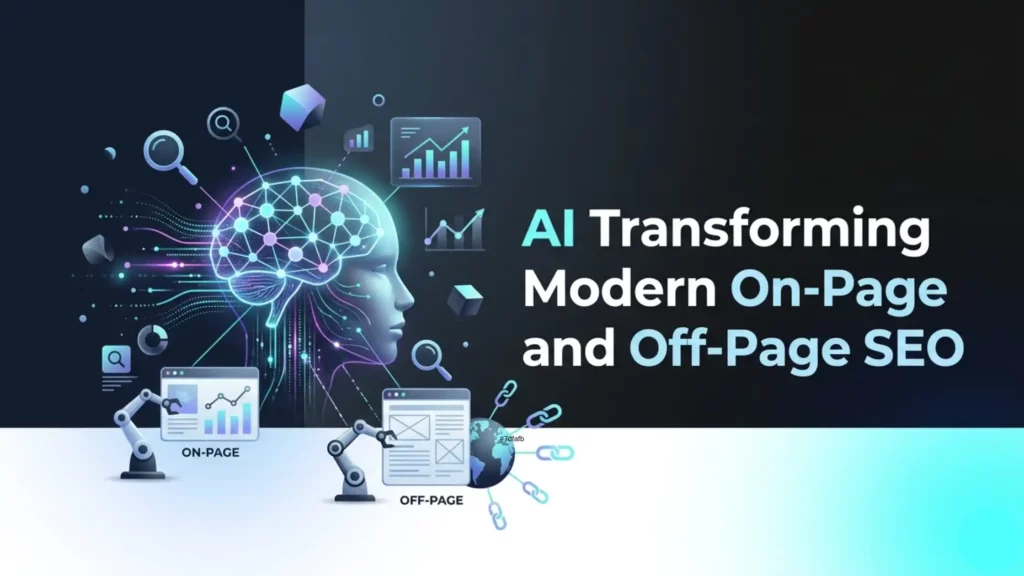
SEO or Search engine optimization is a process that helps websites become more discoverable, accessible and popular on the internet. It helps websites rank well on SERPs (search engine results page). There are both technical (speed optimisation, mobile friendliness, schema markup) and non-technical (content quality, user experience, backlinks) aspects of SEO. In 2026, AI ushered in a virtual renaissance. The way we consume content has changed drastically, and that is the reason why the way we construct content also needs to change.
By the end of this blog you will:
Have a basic idea of how AI changes the way we do SEO and hopefully you will embark on a more successful content making journey.
Table of Contents
ToggleHow AI is Changing On-Page SEO
AI and Content Creation
This is where I would like you to take a look at your search history and understand how exactly you have searched for things and what results did you expect to show up. If your idea was to research you must have wanted the most reputable sources to appear on top and if you wanted a quick answer you probably looked at the AI overview.
To appear on AI overviews, which primarily draw traffic to your site you need your content to be AI SEO friendly, which involves AEO (answer engine optimisation) and GEO (Generative Engine Optimisation)
AEO
- AEO refers to the process through which content is written in such a way that it answers specific questions that users may search for. For example, if you are writing a blog on keyboard shortcuts in Windows, you may include a line, “to copy all the text appearing on a window, press Ctrl+A”, in response to the possible query “How do I select all text on screen?”
GEO
- GEO refers to the process in which you create written content in such a way that it becomes easier for AI to generate answers using it. For this your content needs to be clear, relevant, trustworthy.
AI for Keyword Optimization
AI has the capability of analysing hundreds and thousands of content across the internet and notice trends and suggest to you the most relevant keywords, around which you may build your content. AI is instrumental in:
- Predicting keyword trends
- Suggest long-tail keywords
- Uncovering hidden trends
Pro tip: Use long tail keywords that drive high conversion.
How AI is Impacting Off-Page SEO
AI and Backlinking
A crucial part of backlink building is answering questions on Reddit, Quora and identifying content gaps in authoritative websites and reaching out to them and asking to write on their behalf. Here is how AI helps:
- Helps analyse what questions people are asking on Q&A platforms like Quora and Reddit.
- Helps you write content that exactly answer what people are looking for
- Identifies content gaps in authoritative websites and gives you a list of all the places you can contact and write for as a guest writer.
Pro Tip: Incorporate AI-powered tools like Link-able or CognitiveSEO to streamline your backlinking strategy and increase your site’s domain authority.
AI-Powered Reputation Management
AI tools help businesses manage their online reputation by monitoring brand mentions, public sentiment across social media platforms and review sites all while adhering to brand consistency. AI can also automate responses to customer reviews, improving customer relations and boosting SEO through positive engagement.
Pro tip: Implement AI tools like Brand24 or Mention to monitor brand mentions and reviews, ensuring that you maintain a positive online reputation.
A Table of AI tools and What Aspects of SEO They Can Help You With
Category | AI Tool | What It Helps With |
Keyword Research & SEO Tools | Semrush | Comprehensive keyword research, SEO audits, competitor analysis |
| Ahrefs | Keyword explorer, backlink analysis, SERP data |
| Surfer SEO | Content optimization and keyword suggestions |
| SEVisible / Mangools AI | Entry‑level SEO and keyword tools for smaller sites |
| SEO.AI (Free Tools) | AI keyword research, rank tracking, content helpers |
Content Writing & Optimization | ChatGPT | Drafting, topic brainstorming, SEO friendly writing |
| Jasper.ai | Blog posts, marketing copy, AI writing templates |
| Anyword | AI copywriting focused on optimization |
| Copy.ai | Social media and marketing content drafts |
| Rytr / Copy.ai Variants | Fast text generation and editing |
Graphic Design & Visuals | Canva (Magic Studio) | AI graphics, social visuals, banners |
| DALL‑E / Google Imagen / Midjourney equivalents | Custom AI‑generated imagery for blogs/socials |
Video Creation & Editing | Pictory | Turn scripts/blogs into videos |
| Descript | AI editing and video enhancement |
| Runway / INVEO / HeyGen | Advanced AI video generation and editing |
| Synthesia / Veo / Sora | AI avatar/video generation and storytelling clips |
Social Media & Promotion | Buffer / FeedHive / Predis.ai | AI‑based social planning & post optimization |
SEO Workflow Automation | Gumloop | Workflow automation for outline + keyword tasks |
| AirOps | Content ops automation |
Conclusion
While it is true that AI is making market research and optimised content creation easy, it is also true that it is being so overused, that real people, who are the actual consumers, are feeling disconnected to the product they are investing in. Money is hard-earned, and investing that money is not solely a mechanical decision, it is an emotional and ideological one. Given this, it is extremely important to remember AI can only ever help you identify gaps, and analyse trends, it cannot tell the story of your brand. Effective storytelling is ultimate SEO.
FAQs
AEO (Answer Engine Optimization) is the practice of crafting content to directly answer user queries, improving visibility in search engines.
AI assists by predicting trends, suggesting long-tail keywords, and uncovering hidden trends, boosting content relevance.
AI identifies content gaps and helps you create targeted content for backlink building on platforms like Quora and Reddit.
AI tools monitor brand mentions and automate responses, enhancing customer relations and SEO.
Tools like Semrush, Ahrefs, and Surfer SEO help with keyword research, content optimization, and SEO audits.

