

Google Deprecates FAQ Rich Results: What is the Fate of Schema Markup Going Forward?
Atop, the FAQ structured data developer documentation there is a small but very important announcement by Google, that has changed how websites appear to users of the search-engine. The red lettered note by Google says:
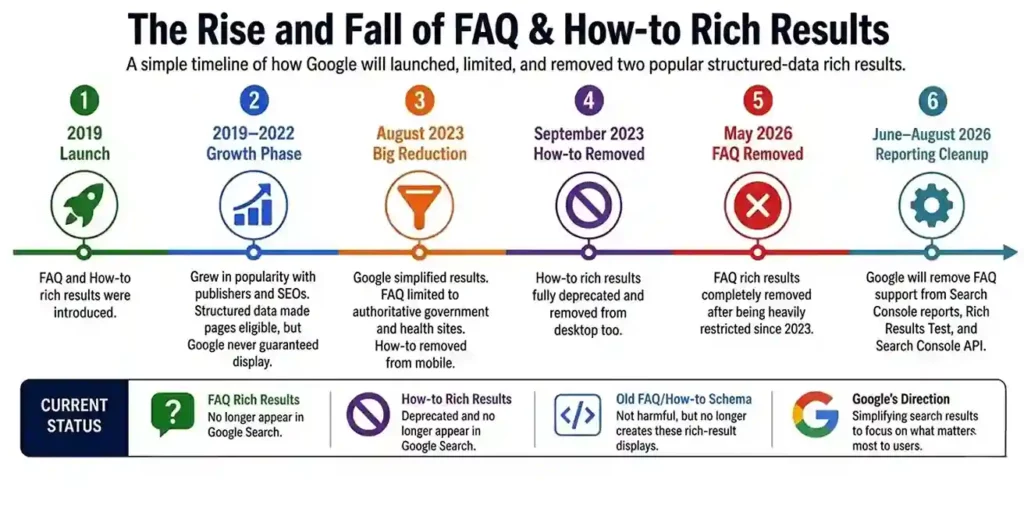
“As of May 7, 2026, FAQ rich results are no longer appearing in Google Search. We will be dropping the FAQ search appearance, rich result report, and support in the Rich results test in June 2026. To allow time for adjusting your API calls, support for the FAQ rich result in the Search Console API will be removed in August 2026.”
Table of Contents
ToggleGoogle’s First Notification About the Deprecation of FAQ and How-to Rich Results
On August 8, 2023 Google had informed, via its Search Central Blog of the search engine’s decision, to downgrade the visibility of two distinct forms of rich results:
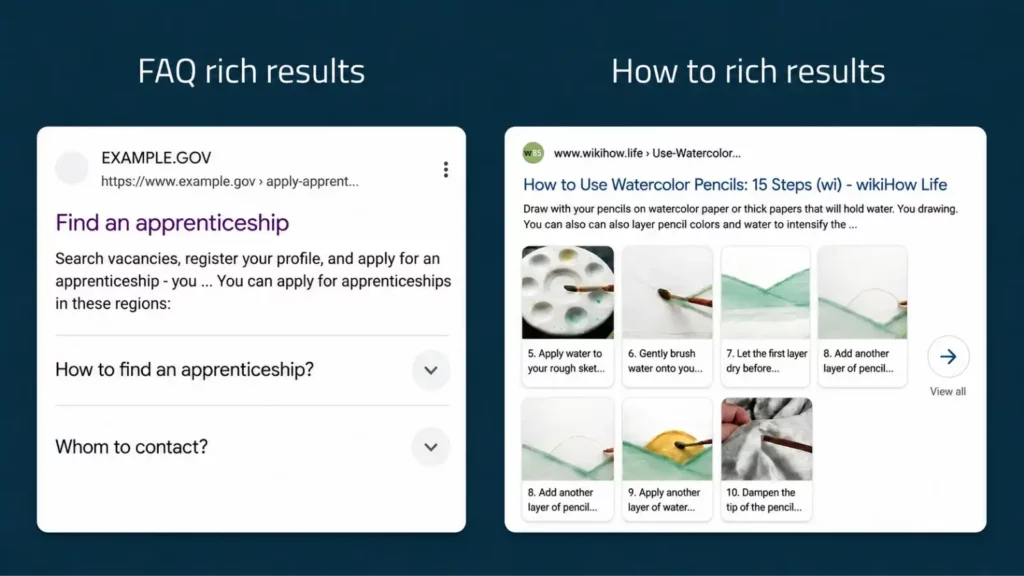
- FAQ Rich Results – Wherein, frequently asked questions were made visible right underneath a webpage’s listing on the search engine’s results page, meaning, you could see them, without having to click on the website’s provided link.
- How-To Rich Results – Wherein, web pages that answered ‘how-to’ questions, the answers being structured in the form of followable steps, would be made visible right on the SERP (search engine results page). Once again, like the FAQs they would be visible without your having to click on the page.
Note – Well-known, authoritative, government and health websites retained their ability to appear as rich results.
Why did Google do it?
According to Google’s blog, the decision was made in order to make search results appear
- Cleaner
- More Consistent
The Challenges the Deprecation Caused
With the introduction of rich results, click through rates skyrocketed. Despite the introduction of Search Generative Experiences (basically AI) between February and May 2023, the performance of rich results remained stable, however between August and September of the same year Google deprecated How-to rich results and reduced the frequency of FAQ rich results. The following concerns were raised next:
- Measurable ROI for initiatives could no longer be obtained due to the absence of clicks and impressions from rich results.
- The value of schema-markup could no longer be understood, and people asked questions like whether or not it is necessary at all.
So, is Schema Markup Necessary at All Anymore?
The primary thing to remember is that schema markup helps search engines understand your content better. So yes, they are still necessary but the structuring needs to happen differently, post-deprecation.
Why Schema is Still Worth Using
1. It helps Google understand your page better
Schema can clarify:
- what the page is about
- what type of content it contains
- who or what the main entity is
- product, business, author, article, review, event, recipe, or organization details
2. It can still make pages eligible for remaining rich results
FAQ and How-to might be gone, but there are other types of rich results that Google still shows. Examples that may still matter depending on the site:
- Product
- Review / AggregateRating
- Recipe
- Event
- JobPosting
- LocalBusiness
- Organization
- Article
- VideoObject
- BreadcrumbList
- Course
- Dataset
For blogs/news sites: use Article, BreadcrumbList, Organization, Person, VideoObject where relevant.
For ecommerce: use Product, Offer, AggregateRating, ShippingDetails, ReturnPolicy.
For local businesses: use LocalBusiness, Organization, opening hours, address, logo, sameAs links.
For job sites: use JobPosting.
For recipes/events/courses/datasets: use the specific supported schema type.
3. It can improve click-through rate when rich results appear
Schema is not automatically a ranking boost, but rich results can improve how attractive your listing looks. Google’s own structured-data introduction cites case studies where pages enhanced with structured data measured higher click-through rates or visits compared with pages without those enhancements.
So the benefit is often visibility and presentation, not direct ranking.
How to Keep Up With Google SEO?
SEO is one of the fastest changing aspects of visibility on Google, especially in this age of AI, we can expect SERP’s to change radically. Considering how dependent on AI people are becoming, SERP’s might not even be relevant anymore in the future.
Now is the time to try and understand the changing nature of SEO and the role of AI within it. A structured introduction to SEO and AI Seo, in the form of a course may help you make decisions about your business’ website better than your competitors.
FAQs
Google stopped showing FAQ rich results in Search from May 7, 2026.
FAQ reports, testing support, and API support are also being phased out.
Google said the change was made to make search results cleaner and more consistent.
It also reduced how often FAQ and How-to content appeared directly on SERPs.
Yes, schema markup still helps Google understand your page content better.
It can also make pages eligible for other rich results like Product, Article, Event, or LocalBusiness.
Important schema types include Product, Review, Article, VideoObject, BreadcrumbList, JobPosting, and LocalBusiness.
The right schema depends on your website type, content, and business goals.
Schema markup is not a direct ranking boost.
However, rich results can improve visibility, search appearance, and click-through rate.

