

Digital Marketing Course vs an MBA in Marketing: Which should you Invest in?
Digital marketing is a holistic term that involves all the processes that lead to the selling of a product or a service. It is a skill that needs to be acquired in a structured manner. If you are someone who wishes to become a part of this industry and are looking for the right educational path that will lead you to it, this blog is for you. We are going to be looking at two possible educational paths, completing digital marketing courses and doing an MBA in marketing. Both promise a career in marketing, but are vastly different from one another based on the time and resources it takes to complete them, the scope of study and the roles they help you break into.
This blog shall cover the following topics:
- A recommendation framework, based on the needs of the student.
- What is usually taught in a Digital Marketing course, who it is for, pros and cons, and roles.
- What is the scope of study in MBA in marketing, who it is for, pros and cons and roles
- Which is better for Freshers?
- Mythbusting
Table of Contents
ToggleA Recommendation Framework to Help you Decide
Requirement | The Better Option |
You want to start earning immediately | Digital Marketing Course |
You want a formal postgraduate management degree | MBA in Marketing |
You have a limited budget | Digital Marketing Course |
You wish to move into leadership/managerial roles later | MBA in Marketing |
You want practical skills like SEO, ads, analytics, social media | Digital Marketing Course |
You want to learn about business strategy, branding, finance, HR, and gain operations exposure | MBA in Marketing |
You are unsure and want to test marketing first | Digital Marketing Course |
You can invest 2 years and higher fees | MBA in Marketing |
Digital Marketing Course
A Digital Marketing Course helps you attain practical skills like the technical knowledge of tools, an insight into AI technologies, which becomes possible because DM courses are highly flexible and more practice oriented rather than theory.
Things Taught in Digital Marketing Courses
- SEO (which now also involves AI SEO, like AEO and GEO)
- Google Ads
- Meta Ads (erstwhile Facebook and Instagram ads)
- Social media marketing
- Content marketing
- Email marketing
- Marketing analytics
- E-commerce marketing
- GA4 and reporting
- Google Tag Manager (firing the right tags, for accurate information)
- Performance marketing
- AI tools in marketing
It is important to remember that DM courses will teach you in detail how to execute campaigns, less importance is given to ideation, market research, consumer psychology and the underlying structures that drive people to buy. Google has its own set of Digital Marketing courses, which are available at Google Skillshop, they can be completed for free and may help you decide whether you want to invest more in learning the skill.
Who are Digital Marketing Courses Most Beneficial for?
- Fresh graduates – At this stage, a practical course which is less expensive helps one form long term career plans.
- Freelancers – Works as upskilling, a freelancer can provide marketing support along with their own specialisation (content writing, design)
- Small business owners – Reduces dependency on agencies, helps the business owner control their own brand narrative.
- Working professionals switching careers – Offers a way into the new industry. Helps them integrate their own experience with the practicality of the DM course.
- MBA students who want practical skills – Helps reinforce the theory learnt in MBA with praxis.
- Creators and entrepreneurs – Helps them create their own online presence. Helps positioning the self as the brand.
Pros of A Digital Marketing Course
- With a DM certification, starting a career can be fastracked, students can apply for internships and entry-level jobs.
- Investment of both time and money is low.
- Practical skills can be learnt.
- Early introduction to new and advanced tools can be obtained.
- Can help students freelance or manage their own business
- Students with any academic background can enroll.
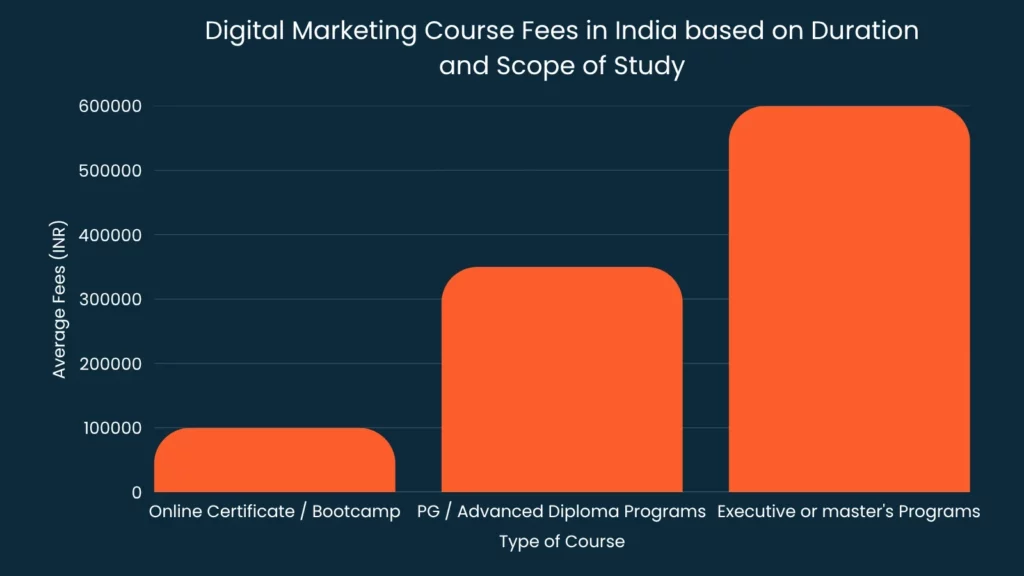
Cons of a Digital Marketing Course
- A DM course is not equivalent to a formal degree, making it difficult to negotiate into a leadership position.
- The quality of available courses vary a lot, some are too basic while some get outdated. (Read our blog on choosing the right DM course, to get an idea of what to look for in a good course)
- Course completion alone is not enough, you need to also build a strong portfolio.
- The competition for entry-level jobs is high.
- A digital marketing course may not teach finance, leadership, business strategy, or organizational management in depth.
Career Options after Completion of a Digital Marketing Course
- Digital Marketing Executive
- SEO Executive
- Social Media Executive
- Google Ads Specialist
- Meta Ads Specialist
- Content Marketer
- Email Marketing Executive
- Performance Marketing Executive
- Marketing Analyst
- E-commerce Executive
- Freelance Digital Marketer
MBA in Marketing
MBA (Master of Business Administration) in Marketing is a formal post-graduation course that helps a student gain deep insight into various factors affecting the market. It is a rigorous academic course that places a lot of importance on theory, so that a student may be able to not just operate in the market but actively influence it. Both the time and the investment required for doing an MBA is high.
What is Taught in MBA in Marketing?
MBA in Marketing. as the name suggests, is about administration of businesses, it is not about the know-how required to use tools, it is about strategising and decision making. The following topics are usually covered in-depth in an MBA course:
- Marketing management
- Consumer behavior
- Brand management
- Sales management
- Business strategy
- Finance basics
- HR basics
- Operations
- Business communication
- Market research
- Leadership and decision-making
For example, IIM Bangalore describes its MBA/PGP as a two-year full-time residential programme designed to prepare students for leadership roles, while IIM Ahmedabad describes its PGP/MBA as a two-year programme that has produced managers, business leaders, and entrepreneurs.
Who is an MBA in Marketing for?
- Graduates who wish to do a formal post graduate degree.
- Students who want to work with corporations as personnel responsible for decision-making.
- Students who want to secure managerial positions.
- People interested in brand management, sales, consulting, strategy, or general management
- Students who are in a position to invest both time and money
Pros of MBA in Marketing
- The degree is academically of huge value.
- Students learn not only marketing but also finance, HR, operations, strategy, and leadership.
- MBA offers opportunities to network with peers, professors, alumni, recruiters.
- Structured placement opportunities are offered.
- Completing an MBA from a reputed college can land a student directly in a leadership position.
Cons of MBA in Marketing
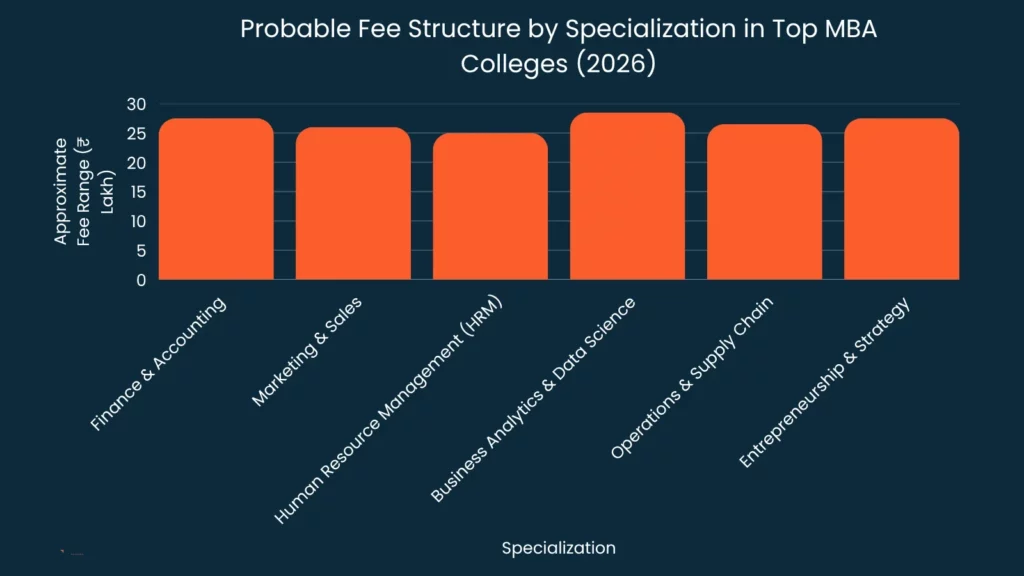
- MBA fees can be a major burden, especially if the college does not offer strong placement outcomes.
- Requires serious time-investment, major Indian management programmes are structured as two-year programmes.
- Sometimes MBA courses tend to focus solely on theory rather than praxis.
- Syllabi is often strict, offering little opportunity to students to study about recent innovation.
- The reputation of the college matters the most.
- Even after an MBA, students may still need to learn SEO, ads, analytics, marketing automation, and AI tools separately.
Career Options After MBA
- Marketing Manager
- Brand Manager
- Sales Manager
- Business Development Manager
- Product Marketing Manager
- Market Research Analyst
- Management Trainee
- Customer Success Manager
- Category Manager
- Strategy/Consulting Associate
Digital Marketing Course or MBA in Marketing, which is better for freshers?
If you are unsure about your interest in the industry, do a digital marketing course first, if you develop an active interest, only then go ahead with an MBA/ The following pointers might help you out:
Choose a Digital Marketing Course if:
- You want job-ready skills quickly
- You are unsure about doing an MBA
- You want to test whether marketing is right for you
- You want to freelance or intern
- You cannot afford an MBA right now
Choose an MBA in Marketing if:
- You want a formal postgraduate degree
- You can afford the time and fees
- You are aiming for corporate management roles
- You can get into a reputed institution
- You want structured campus placement support
Mythbusting
Myth: A Digital Marketing Course Guarantees a Job
Truth: It improves your chances, but your skills, the projects you have done, your communication skills , and consistency have the final say.
Myth: An MBA Will Automatically Land you a High Paying Job
Truth: The reputation of the college, its placement quality, the student’s performance, and market conditions influence job attainment.
Myth: Digital Marketing Is Only About Social Media
Truth: It includes SEO, paid ads, analytics, email, content, e-commerce, automation, and strategy.
Conclusion
The scope of study and the financial and temporal commitment required for MBA and a Digital Marketing course are vastly different. A DM course is skill-oriented, it is ideal for students who want to secure a job early and gain experience in the field before they make a greater commitment. It is important to remember that getting into an MBA is an interview intensive process, if you already have prior experience in marketing and proof of work, you will get an advantage in your interview. A DM course can help you gain independence quickly, while an MBA will land you lucrative jobs. It is not a fair fight between the two, as the criteria of evaluation is very different for each. Treat this blog as a glimpse into the diverse worlds of the two, and don’t worry, you will get there!
FAQs
It is better if you want practical skills, faster job entry, and lower investment. An MBA is better if you want a formal degree and long-term management roles.
Yes, but only if you build practical skills, complete projects, create a portfolio, and apply consistently.
Yes. This can be a smart path if you first want practical experience and later want management growth.
It can be worth it if done from a credible institution with strong placements, good faculty, industry exposure, and a reasonable return on investment.
No. Many digital marketing roles focus more on skills and results than degrees. However, an MBA can help in managerial or strategic roles.
